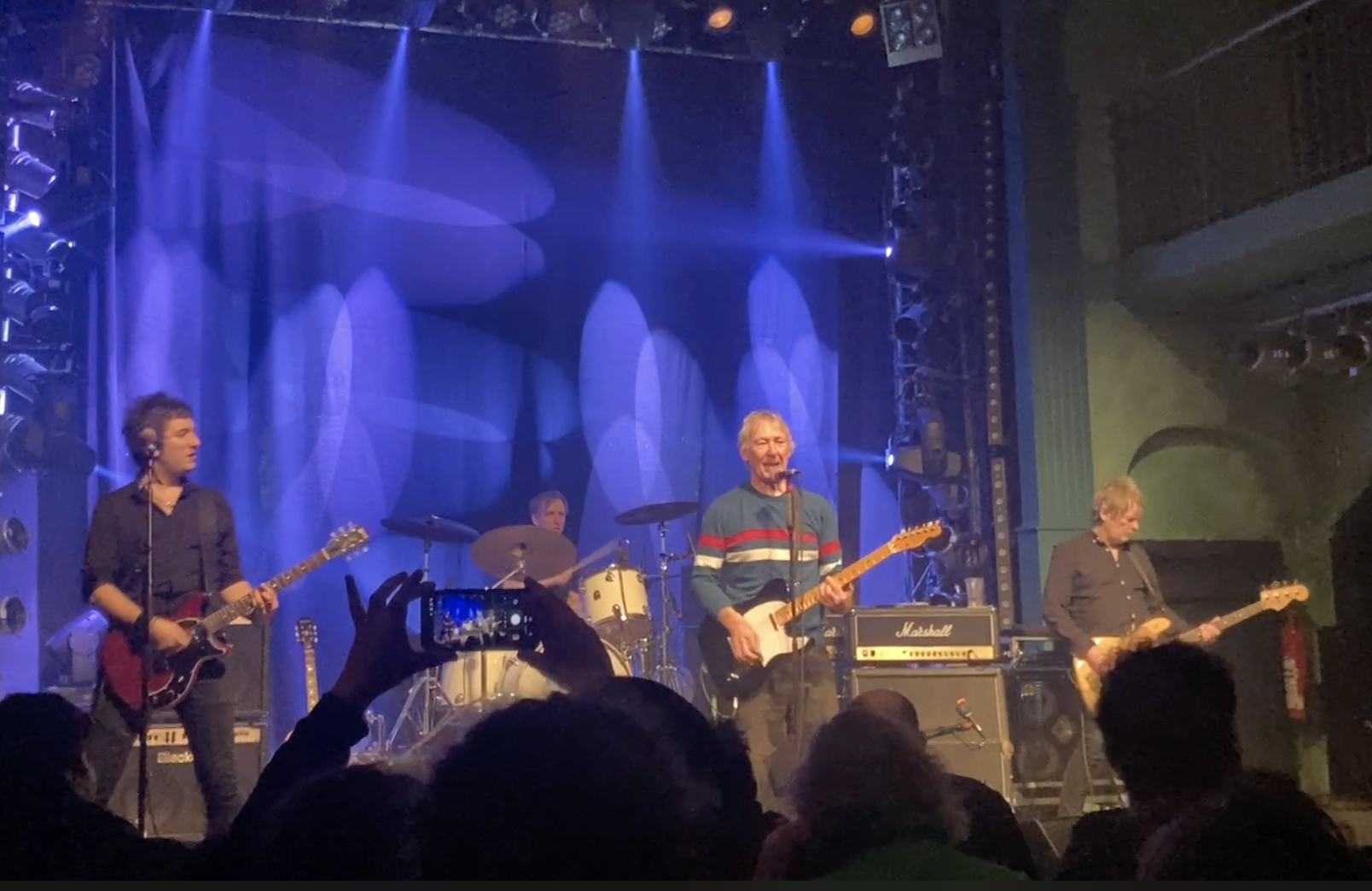
Buzzcocks at Gruenspann 21.2.26

From the point of view of an American, something that, at least until the current administration gets around to purging me from the citizenship list, I technically still am, Punk is a rather vague, amorphous concept. Depending on what it means to you, it could have any number of meanings and any number of points of origin. I can’t say that I’ve ever been particularly troubled by this. I feel quite comfortable with the idea of punk as a multi-headed monster that may well be found hiding between the lines of the story of American popular music all the way back to its origins. That being said, I can’t help but be a bit amazed by the absolute clarity with which my British friends see punk, both in terms of what it is and where it comes from.
For them, punk has a clear point of origin with the formation of the Sex Pistols in late 1975 and the proliferation of other bands that formed in their wake over the course of the next year or so, most especially The Clash, The Damned, The Slits, and Buzzcocks. I had a brush with this moment a few months ago when I saw Jah Wobble, the original bass player of Public image Ldt., who was present for all this but not yet a member of a band, but I had never experienced one of these so-called first wave punk bands in person until this past Saturday, when I had the opportunity to see Buzzcocks perform at the legendary Grünspann club in Hamburg.
This was one that I had been looking forward to since I first saw a poster for it a few months ago. Of the bands I mentioned above, I would have to say that The Clash was probably the greatest, but Buzzcocks are the one that mean the most to me personally. Whereas the other groups all formed in London, Buzzcocks hail from Bolton, a large town in Greater Manchester. The group’s two primary figures, Pete Shelly and Steve Diggle, first met at The Sex Pistols’ legendary first concert at Manchester’s Lesser Free Trade Hall in June of 1976, and their first show together was opening for the Pistols when they returned the next month and debuted their new song, “Anarchy in the UK.”
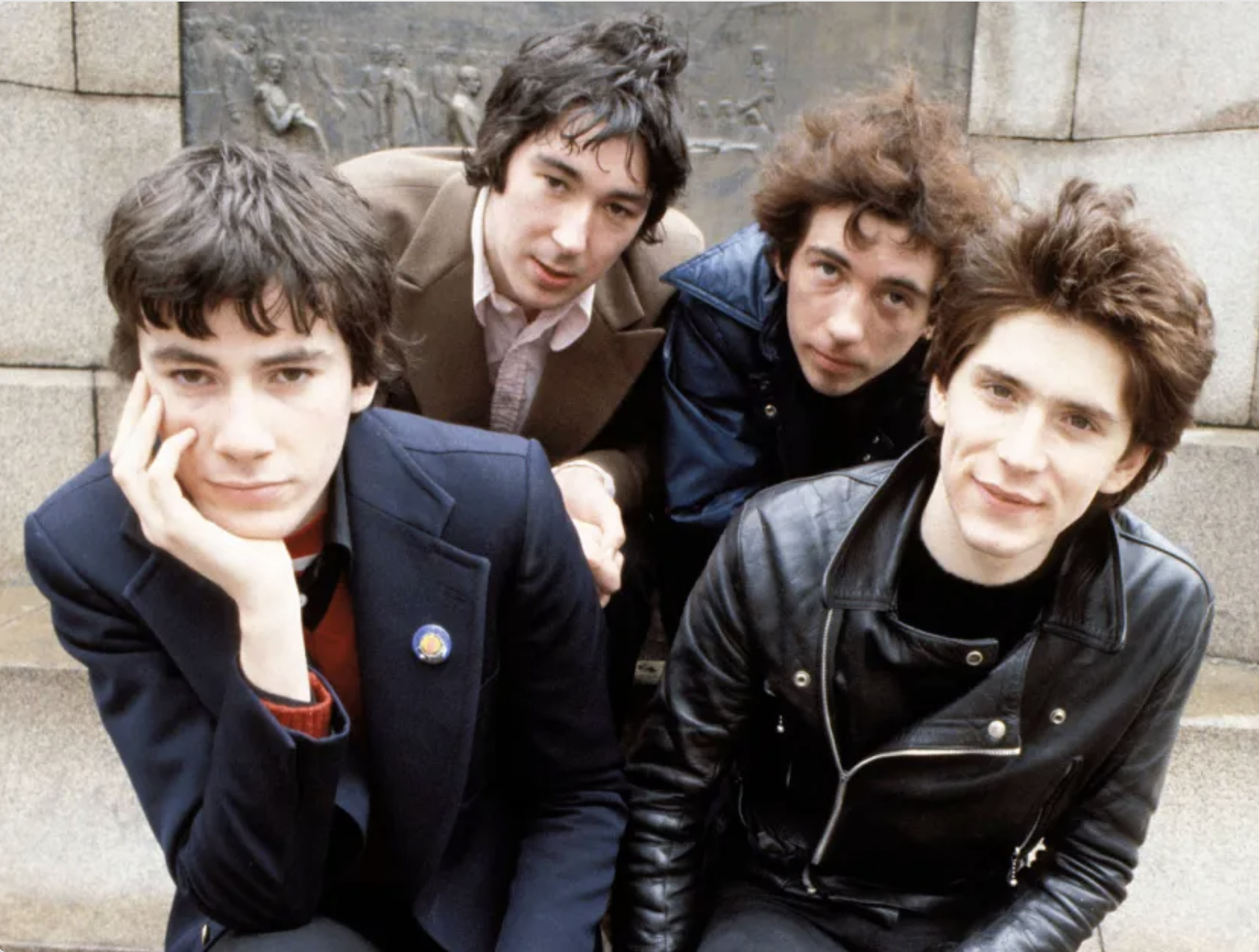
Buzzcocks, a long time ago. From left to right: John Maher, Steve Diggle, Pete Shelley, Steve Garvey
It could be that having this distance from the center of the scene made it a bit easier or more natural for them to stake out their own direction. Of course, like the others, they started out, with their original front-man Howard Devoto, making music that sounded an awful lot like the Sex Pistols, but very soon they started to take things in a different, more melodic, direction, drawing inspiration from the power pop of The Ramones (see for example “Breakdown” from their 1977 EP Spiral Scratch, which features a striking combination of stylistic elements from the Ramones and the Pistols) but adding layers of lyrical subtlety and musical sophistication, ultimately resulting in something that often sounds, at least to me, like much louder and more aggressive cousins of Belle and Sebastian. Obviously, this is right up my alley.
On the other hand, the reality of Buzzcocks in 2026 is that, of their classic lineup of Pete Shelley (guitar and vocal), Steve Diggle (guitar), Steve Garvey (bass), and John Maher (drums), only Diggle, who is now the main vocalist, remain’s in the group, and that is the kind of situation that can sometimes go very wrong. Not so long ago I went to see another classic punk band, albeit not one anywhere near the level of Buzzcocks, that had been reduced to one original member. The experience was so disappointing that I opted to not write anything about the show, just to avoid having to spend time thinking about it.
So, it was with some trepidation that I went to meet my friend at a bar down the street from the venue. When I arrived I learned that I had just missed the band, who had stopped in for a pre-show drink and had apparently been super friendly and even excited to hear about the fact that I’m from Tennessee, where they performed a few months ago. Well, that was a shame, but it also seemed like a good sign.
We had just enough time for a quick beer and then headed to the venue, arriving just in time for the opening act, a quite successful (from what I can gather) and strikingly young Essex group called Pet Needs who were, according to them, performing for the first time with acoustic guitars and without their drummer, who I think they said was getting married. Under those circumstances, I have to say that they performed quite admirably, and the lead guitarist in particular seemed to have done an amazing job of acoustifying his parts at short notice.
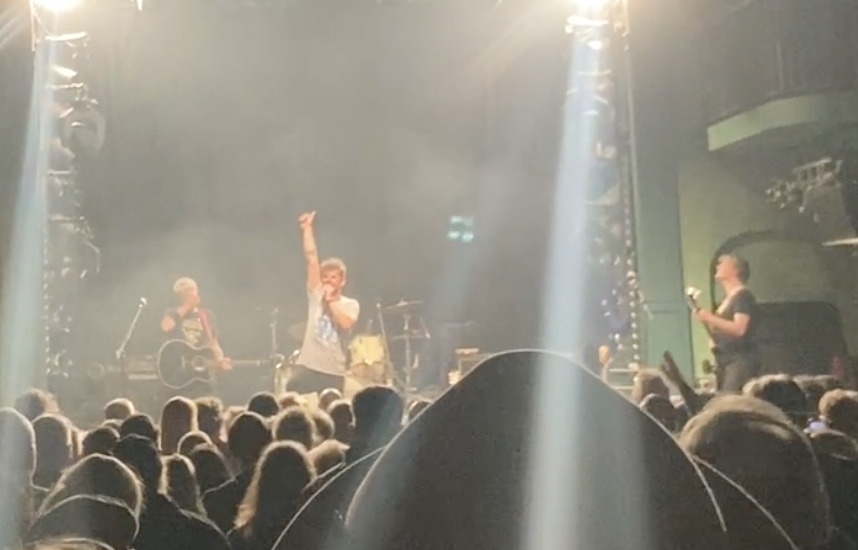
Pet Needs
That being said, there also definitely seemed to be some nerves on display. Now, I’ve never seen Pet Needs perform under normal circumstances, so I can’t be totally sure, but I can say that the lead singer talked more than I’ve every seen a performer talk during a concert, and he repeated himself quite a bit. He also climactically stuck his fist in the air a lot, I’d say at least a dozen or so times during their short set. In the end my friend and I both agreed that we weren’t blown away, but that we would be interested in seeing them perform in their normal constellation before arriving at a judgement.
We had just enough time to grab another beer and move a bit forward in the crowd before, to the suitably bombastic chords of Richard Strauss’s Also Sprach Zarathustra, the current incarnation of Buzzcocks appeared on stage. It pretty quickly became apparent that my trepidations had been unwarranted. Diggle is definitely not the singer that Shelley was, and his guitar playing admittedly came across as a bit shaky and undisciplined, but from the first moment he was oozing punk charisma that made him impossible to look away from and extremely endearing.
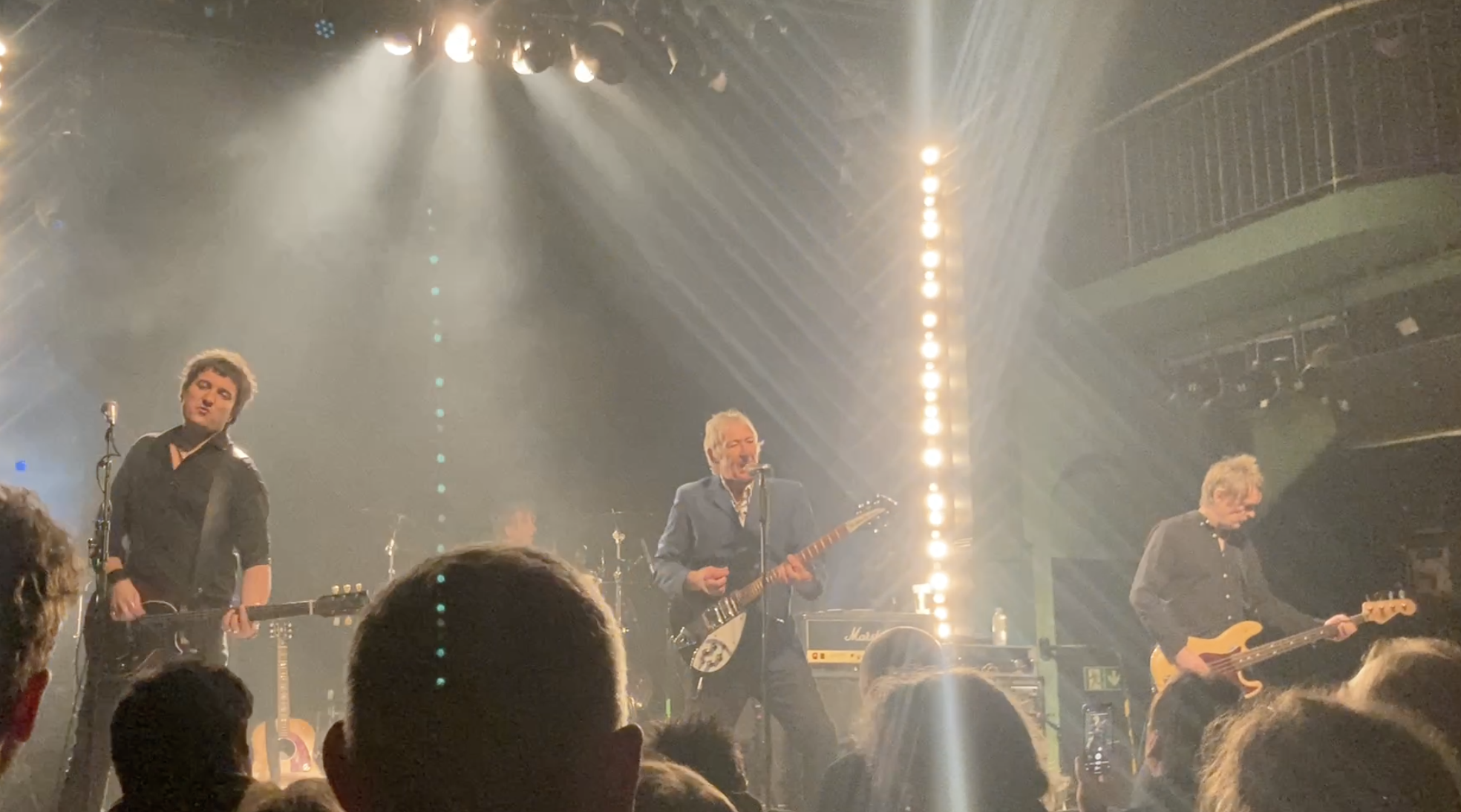
And what’s more, he and the rest of the band made it clear that they fully understood what we were all there to see. From their opening number, the Ramonesey 1978 single “What do I get?” they played versions of their songs that were louder, edgier and more chaotic than the originals, often seeming as though they might shatter at any moment, but held together by the impeccable rhythm section of Danny Farrant and Chris Remington, who are both, it should be said, considerably stronger musicians than the people they replaced in the band.
The set consisted of a mix of singles from their classic era of 1977-79 and more recent tunes, mostly from 2022’s Sonics in the Soul and the brand new Attitude Adjustment, which I have to admit were mostly new to me. Despite this four decade lacuna, they played everything with a stylistic continuity that made it almost as easy to get into the newer songs as it was the classic favorites.
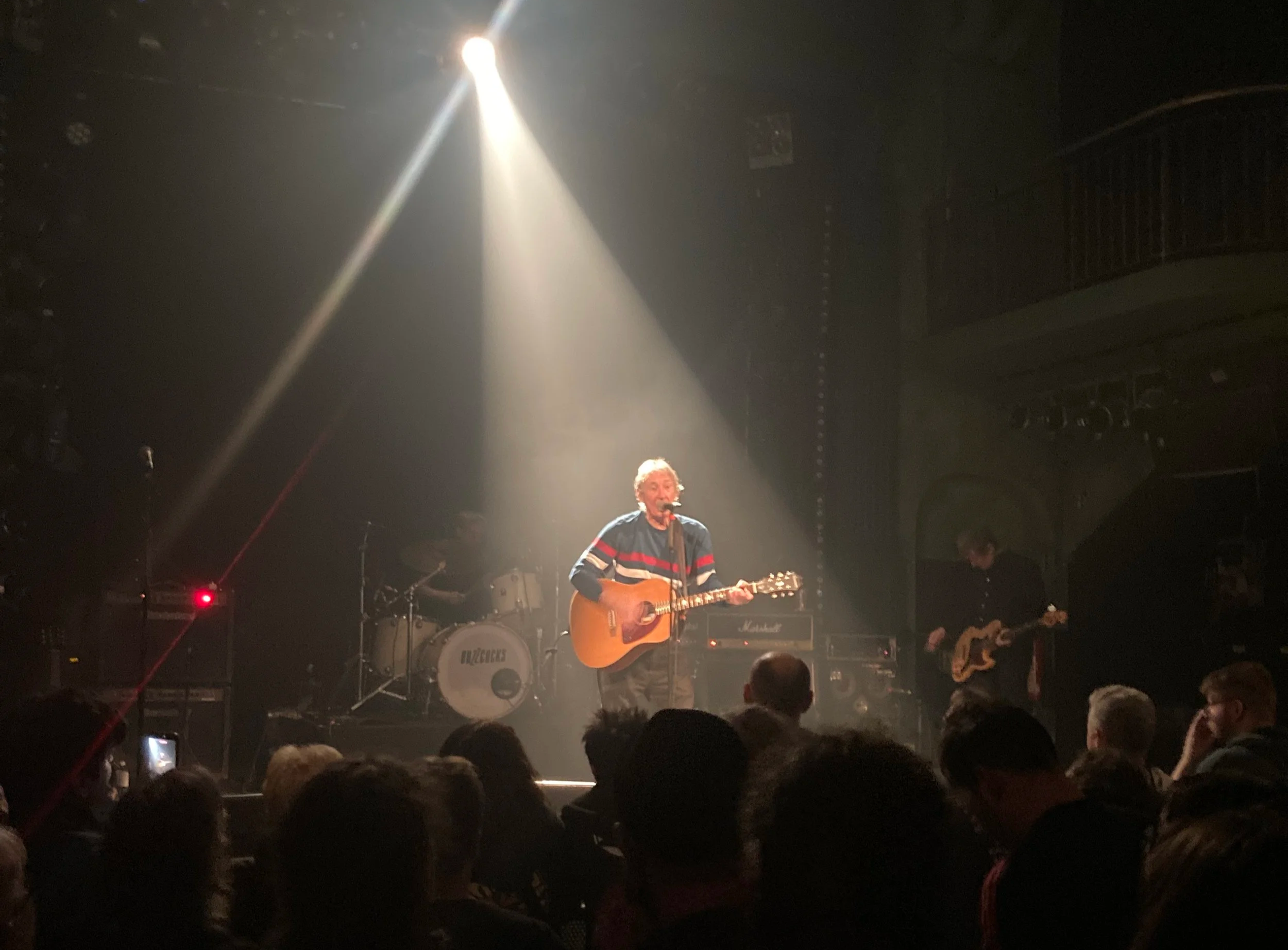
Diggle gets folky
They left the stage after a respectable set of 14 songs, and a few minutes later Diggle reentered alone, wielding an acoustic guitar and sporting a cozy-looking striped sweater, as if he had disguised himself as a folky singer songwriter to perform an impressive acoustic version of their most recent single, “Poetic Machine Gun.” This was the start of an encore that was nearly as long as the proper set, beginning with a suite of songs from the new album in acoustic versions, and then returning to full noisy form for another string of classics, all leading up to a memorable performance of their biggest hit, and probably their strongest pop song, “Ever Fallen in Love (With Someone you Shouldn’t’ve)” and the closer, 1979’s “Harmony in My Head,” a song likely chosen because it was written, and originally sung, by Diggle.
If I could go back in time to see Buzzcocks perform during their late-70s heyday, I would of course do that. Lacking that ability, though, I have to say that I’m extremely happy to have seen them in their current form and delightedly surprised by how legitimately exciting and engaging the experience of seeing them was. I’ll be back to see them again the next time they come to town, and if another legendary band with just one surviving member decides to come around, I’ll be a lot less hesitant to buy a ticket.
-Peter Lawson 23.2.2026