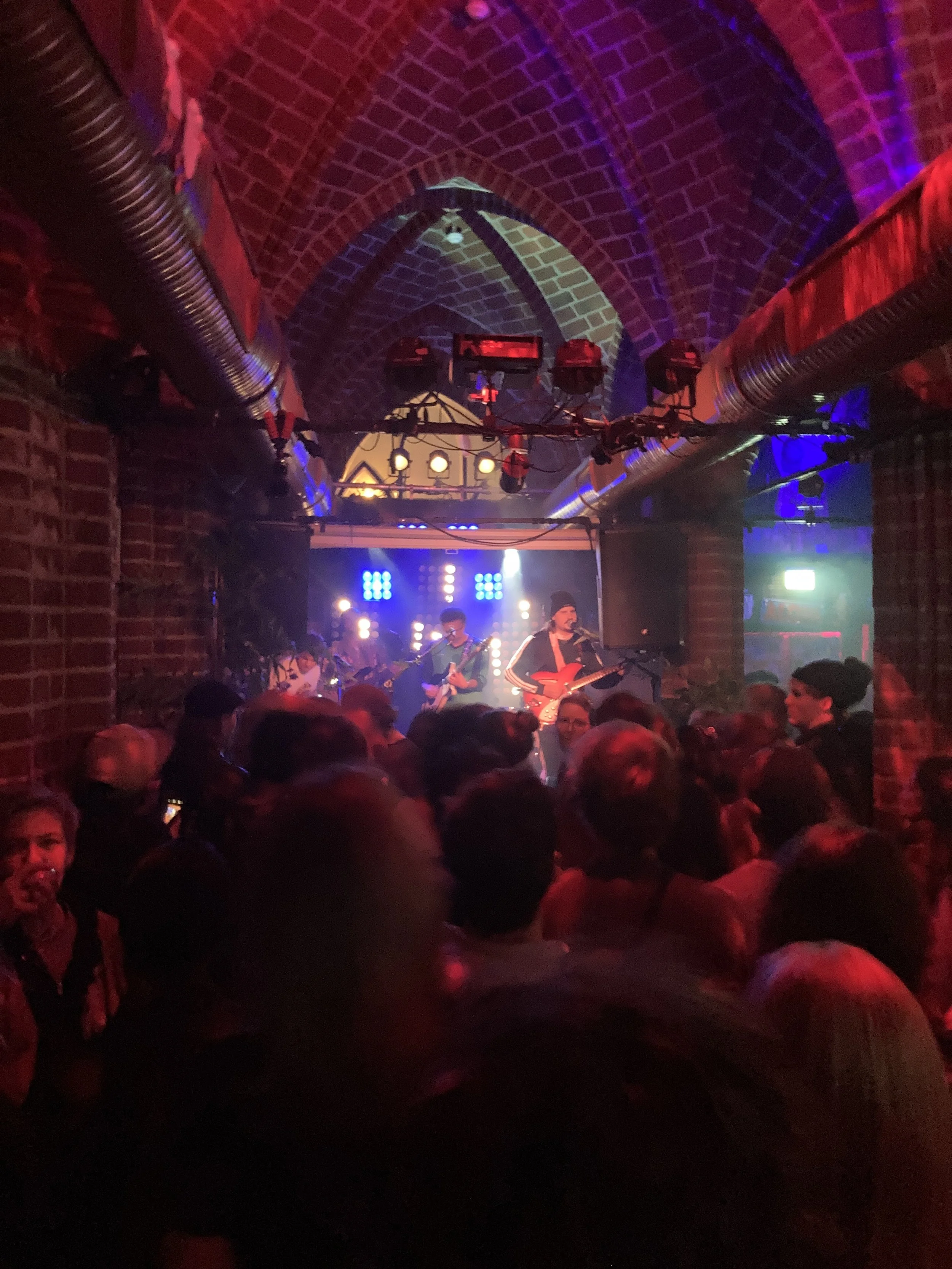
Tropica at Freundlich + Kompetent - 17 January 2026
Today’s Hamburg is a sprawling honeycomb of once scattered rural communities, which have gradually been eaten up the growing city over the past couple of centuries or so. Some of these former villages have had considerable success at maintaining themselves as semi-independent entities with their own distinct characters and “downtown” areas, but in the eleven years since I moved here I’ve listened to a lot of long-time residents lamenting the degree to which certain aspects of city life, and especially nightlife, have been increasingly shunted to the center in recent decades. In my experience, this rings true. You can find restaurants maybe a bar or two pretty much everywhere, but for a real party, and in particular for shows, you generally have to go to the little sliver of city closest to the river.
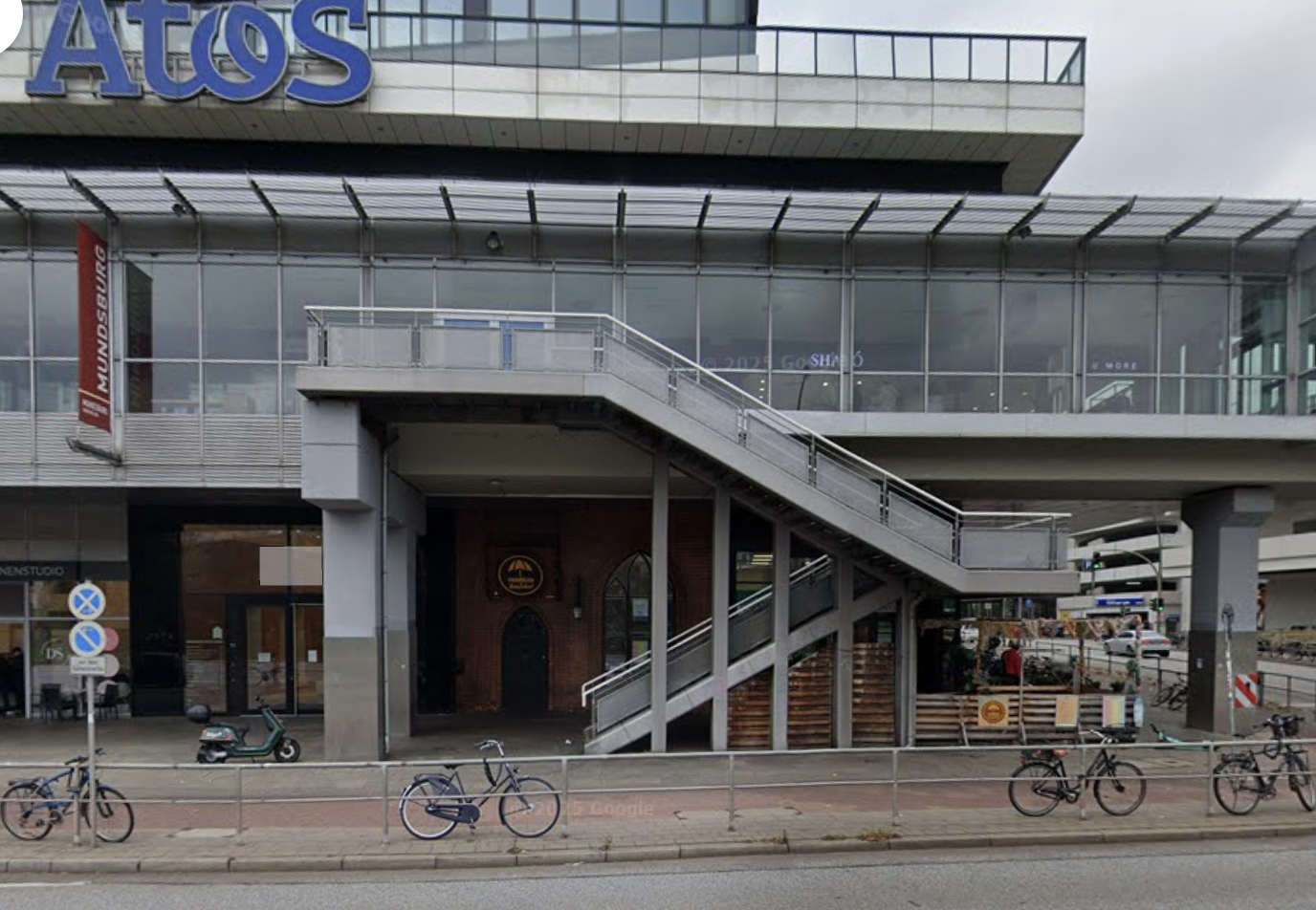
It’s in there somewhere
There are still a few exceptions, though, and one particularly glorious exception can be found in an unexpected corner of the former village of Uhlenhorst. There, hidden in between what was once Germany’s largest urban shopping mall and another smaller shopping mall, there stands an inexplicable little gothic structure that’s rendered nearly invisible by the layers of glass and steel that surround it.

The Little House
Is this an old building that somehow managed to stay put while all this development happened around it, kind of like the little house in the children’s book, The Little House, or did some coked-up developer in the 70s just decide that what his ultra-modern commercial district really needed was a tiny cathedral? I haven’t had any luck finding out, but if it’s the latter, I have to say that they did a pretty convincing job. The high pointy arches and vaults, all done in dark Hansiatic red brick, lend an air of majesty to this space, which is probably smaller than my apartment, and the current tenants, a bar called Freundlich + Kompetent (Friendly and competent) really seem to be making the most of it.
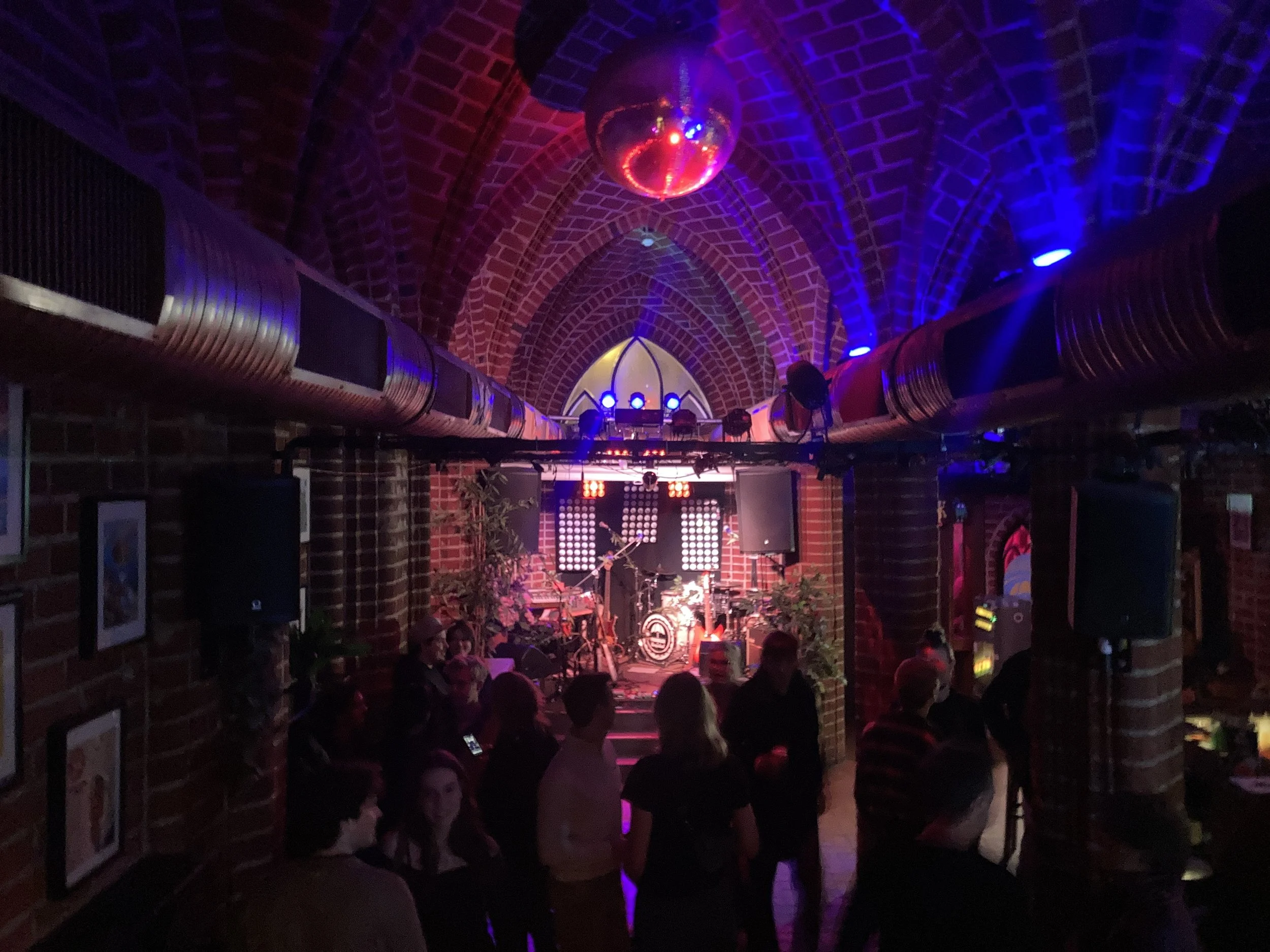
The space consists of a large lower area with the bar, a few tables, and a tiny 3x3 meter stage, connected by stairs to a smaller loft area with a large and well-equipped sound booth, toilets, several foosball tables, and, notably, a beer vending machine so you don’t have to delay your game when you run dry. Prices are a bit on the high side, but this is more than made up for by the fact that they host a ton of shows and, if their claim is to be believed, all of them are available for the price of whatever you feel like dropping in the jar. As a denizen of a sleepy area just a bit further out in the same direction, I’m a bit miffed that I didn’t know about this place until this past Saturday, when I wandered in to see a band called Tropica.
Tropica is a five-piece indie rock/pop band with a decided psychedelic bent that’s been together since 2018. They come from the Rheinland, the region that specialized in producing hipster-pleasing art-rock bands like Can, Neu!, and Kraftwerk back in the 70s. Some of the music Tropica makes resonates with those bands too — they all seem to be big fans of repetitive, drone-based minimalist grooves — but whereas those guys were futurists who often sought to divorce their sound from the influence of previous rock music (perhaps preferring to embrace more prestigious influences from the classical tradition), these self-proclaimed music nerds don’t seem to have any qualms at all about loading their music up to the rafters with references to everything from America to the Zombies.
One thing that was immediately striking about Tropica’s deployment of their myriad influences is that it seems to fall within two very distinct modes. As soon as they arrived on stage, unannounced, they immediately set up a quietly pulsing drone on guitar and bass, which they then proceeded to gradually and incrementally develop for the next four minutes or so, until they had built it into a hard-driving heavy groove. Initially, I assumed that this would be the intro of their first song, but no, it WAS their first song. Then, after an applause break, they started into song #2, “Oceanside,” a single from their 2024 album, Is this the Only Life I Know, and suddenly we seemed to have entered a completely different world: lightly syncopated chords leading into a gently swirling guitar riff, snappy backup vocals, lyrics about falling in love at the beach, and a tight AABA structure.
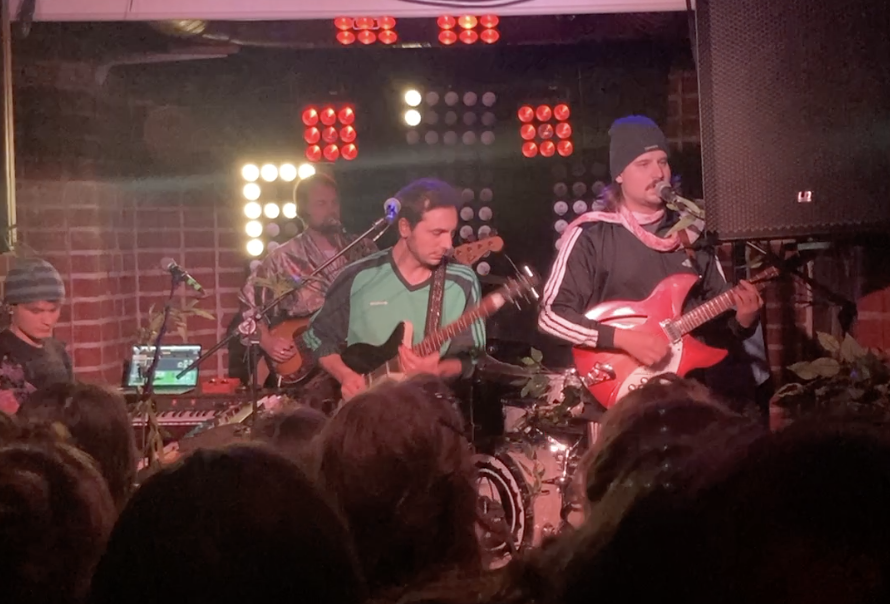
In other words, Tropica seems to have one foot in the world of tightly structured, short and sweet pop songs, likely rooted in the music of the Beatles, but filtered through the work of ‘90s pop craftsmen like Weezer and especially Wilco, and the other in a completely different musical space of layered repetitive grooves that eschews song structure in favor of the slow, incremental evolution of musical minimalism. You could say that these two poles are tied together by the presence of certain psychedelic sonic elements that they seem to use, to a greater or lesser extent, to season nearly everything they play, but clearly, these are two zones of music making that don’t mix easily, and for they most part, they continued to keep the two separate for the remainder of the show.
It could be that there is some kind of Van Halen-esque battle of aesthetics happening within the ranks of Tropica, but I don’t think a conflict is necessary to explain what’s happening here. I suspect that some explanation for this duality may be found in Tropica’s origins. According to a bio I found on what seems to be their old, abandoned website, they got their start way back in 2015 as a casual Wednesday night jam session and only gradually eased into writing songs and performing together as a band. It seems likely that the more freewheeling side of their sound is a affectionate holdover from those early days, while the more cleaned-up and regimented side, which seems to be pretty much all you get on both their album and their 2019 EP, On a Rainbow, is what happened when they decided to make a go of it and discovered that at least one of them had been born with the Tin Pan Allee gene.
Particularly when they’re in their pop song mode, they benefit enormously from what is clearly a broad and eclectic knowledge and understanding of rock (and rock-adjacent) music. In addition to the 60s and 90s pop that seems to be their bread and butter, there were moments that brought elements of classic soul, new wave, southern rock, smooth r&b, and even a few subtle hints of rockabilly and punk. They also frequently shift styles, and even time signatures, between sections of the same song, as in their 2024 single “No Explosions,” a definite highlight of the show, in which a hard-driving rock verse with surf guitars collides with a doowoppy chorus in a dramatically slower triple meter. I have to say, their ability to operate convincingly while navigating between so many styles is both unusual and legitimately impressive.
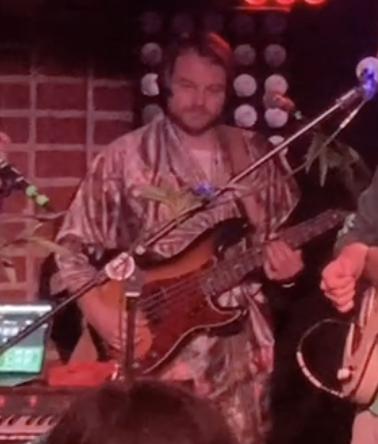
Fabi Kresin
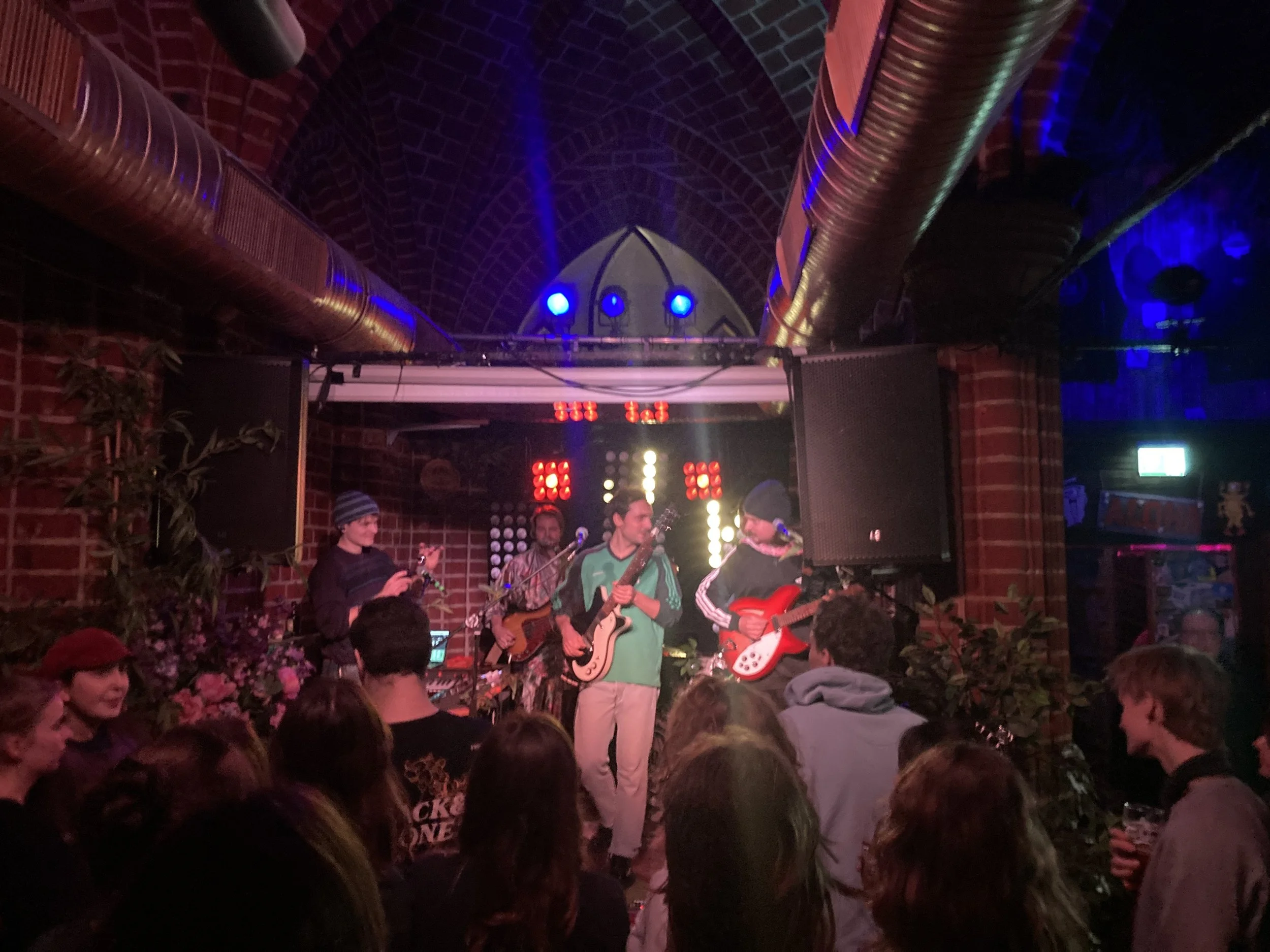
From what I could tell, a great deal of the credit for this should go to kimono-clad bass player Fabi Kresin, who, despite being wedged into the back corner of the tiny stage, played fun and interesting bass lines idiomatically and percussively throughout the show. He and his (maybe) brother, rhythm guitarist Tobi Kresin, also contribute enormously to the sound of the band with their seemingly effortless harmonized back-up vocals. Apparently, these two come from a musical family, and Tobi has been playing in various bands with his brothers (or cousins; who knows) Dennis and Markus for over two decades. This background is definitely reflected in the solid and relaxed confidence with which they approach their material. Actually, it’s fair to say that a strikingly relaxed competence was on display from all the members of the band, including lead singer/guitarist Dino Mujcinovic, drummer Tim Grünewald, and keyboard player Nino Schneyer.
By and large, the audience on Saturday seemed to be on board with what the band was doing, and especially towards the end of the show, they had the whole crowd moving with admirable synchronization. There were also a few moments, though, especially during the extended psychedelic grooves, when the crowd seemed to be getting a bit antsy, and there was a significant buzz of conversation. Initially, I felt a bit bad for the band when I noticed that, but the more I watched them, the more I had the feeling that they really didn’t care. They seemed to be perfectly happy to be there on stage together, doing exactly what they wanted to do. It seems that something of their origins as a weekly jam session is still present in the way they operate, even all these years later.
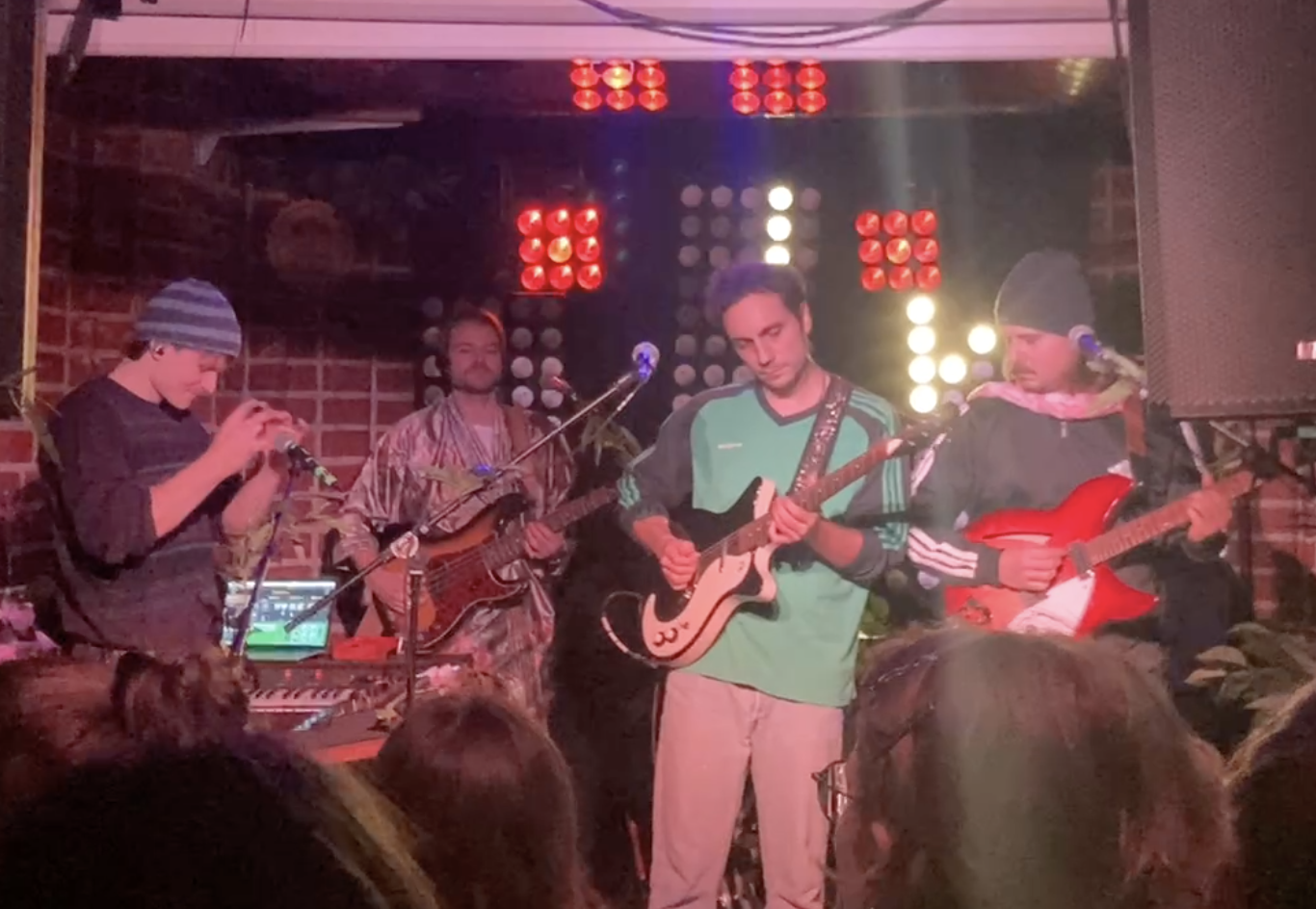
Tropica is clearly a serious band, with two well-produced releases and a reasonably professional website. Surely, they have some aspirations for what they want to achieve. Nonetheless, they don’t give the impression that I’ve had from other young bands I’ve written about for this series of reaching for the brass ring. I don’t begrudge any band, or any artist, for striving to succeed. Why shouldn’t they get their music out to as many people as possible and receive the recognition they deserve. Still, there’s something deeply refreshing, especially in this era of hunting “likes” and appeasing the algorithm, about seeing someone making exactly the music they want to make for no reason other than that it’s what they want to do.
-Peter Lawson 24. January 2026